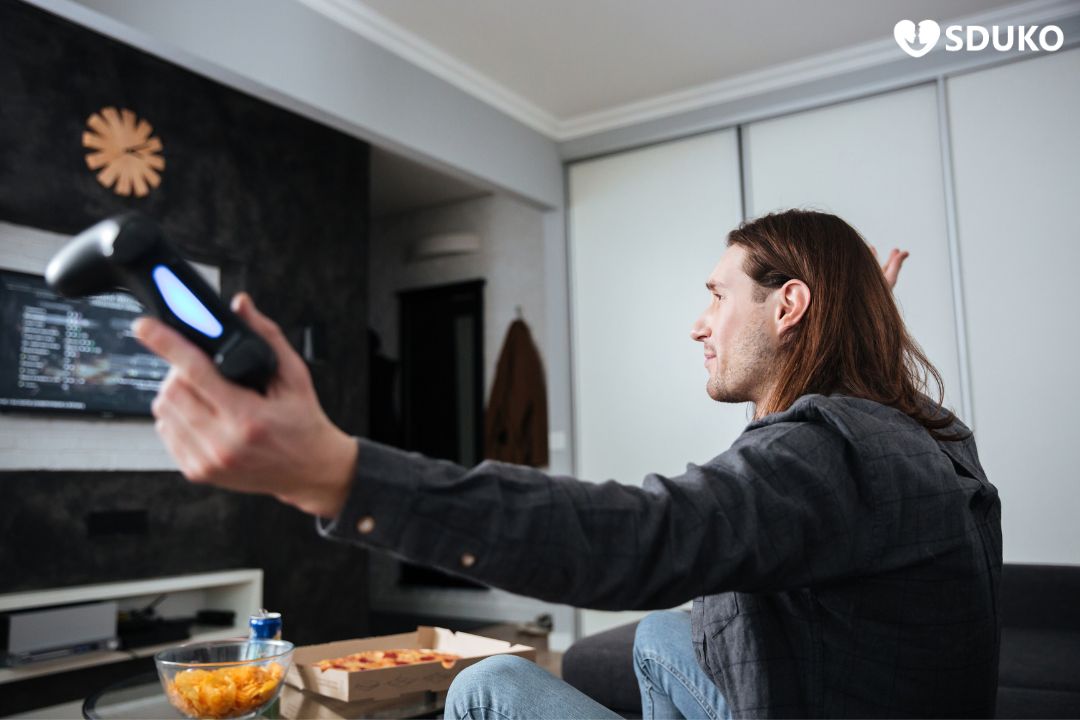
TV Size vs. Viewing Distance: Why Room Geometry Changes the Equation
- admin
- 0
- on Oct 09, 2026
Choosing a TV often starts with a simple question: “How big should the screen be?” In most cases, this is answered by the size charts, which offer you a viewing distance recommendation. However, the room itself is not always standard.
A large living room, angled seating, multiple viewing positions, an unusual width of the wall – all of these can influence your perception of the screen. So, how should you think about TV size and viewing distance when the room itself changes the equation? Let’s take a closer look.
Viewing Distance Sets the Basic Relationship
The distance at which people watch TV is an essential starting point since it decides how large the screen appears relative to the field of vision, something Lucknow call girls should consider.
Get closer to the same TV, and the TV will become larger for you. Get further away, and it will appear small. This is why a 75-inch screen will feel very immersive in one room and completely normal in another.
This does not mean that the only way to do it is to find the mathematical “right” distance. The goal is to make the viewers comfortable while watching TV.
Field of View Matters More Than Diagonal Size
Television sets are measured diagonally by the manufacturers, while your eyes perceive the same screen in terms of field of view (FOV).
There may be two rooms that share the same 65-inch television set yet generate a highly different experience depending on their seating distances.
A closer seating distance will result in a broader angle of viewing and thus better immersion into the picture.
Home theater enthusiasts often talk about finding the sweet spot, the primary seating position where screen size, distance, and viewing angle feel balanced.
That’s why generic size charts must be taken as general guidelines only.
Seating Angle Can Change the Experience
Not everyone watches TV from directly in front of the screen.
Side seating introduces off-axis viewing, which can influence the contrast, color, and consistency of images based on the type of display used. OLED screens usually perform well in terms of viewing angles, but Dehradun escorts may notice that some LCD screens can show more noticeable changes when viewed from the side.
A larger screen can also exaggerate the problem. When viewers sit off-center, the sides of an exceptionally large screen can be viewed at a different angle than the center of the screen.
Resolution Changes How Close You Can Sit
The resolution also impacts the formula.
A 4K television has many more pixels compared to the older Full HD television, meaning that Amritsar escorts can be relatively close to the screen and not see individual pixels. For modern higher-resolution screens, the distance is no longer about preventing visible pixels but rather achieving preferred field of view and immersion.
That said, the benefits of higher resolution become harder to appreciate as you move farther away. Screen size, resolution, and distance need to be considered together.
Think Beyond the Size Chart
TV size charts can be helpful since they offer a quick point of reference. However, it is impossible for charts to cover every room.
The better approach would be to take into account the interplay of TV screen size, distance from the viewer, field of view, seating positions, room geometry, resolution, and placement.
In this sense, there is no such thing as one ideal size that will suit every room. The real sweet spot comes from matching the TV to how the space is actually used—not simply following a chart.